
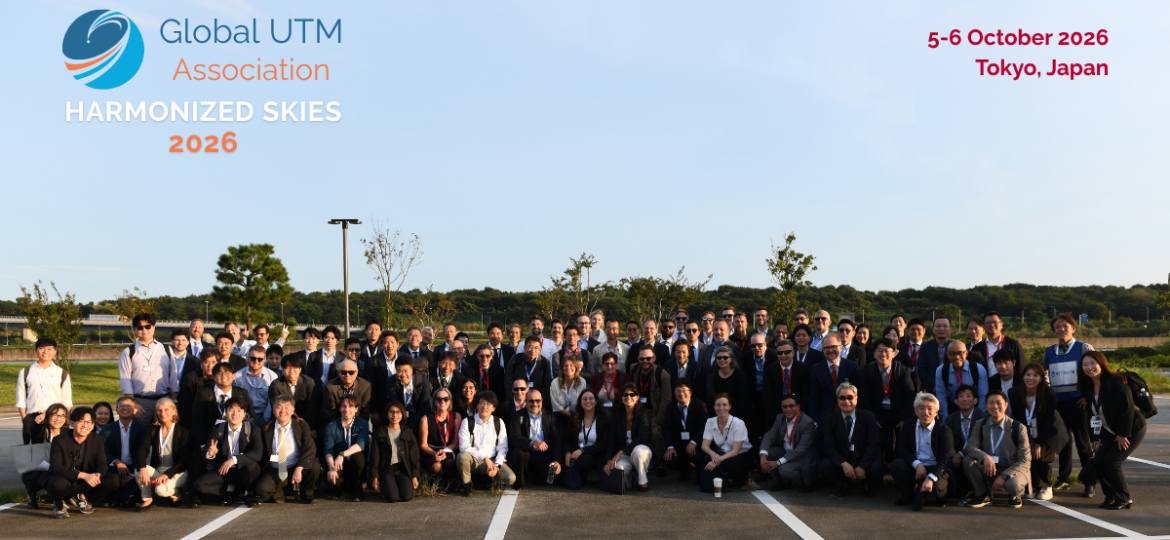
Harmonized Skies 2026 brought more than 140 participants from the international drone, UTM, and Advanced Air Mobility community together for the ninth edition of the Global UTM Association’s annual conference, under the title: Innovate Airspace, Develop Interoperability, Advance Harmonization.
Across the conference, speakers from aviation authorities, technology providers, operators, standards organizations, and the wider digital aviation ecosystem compared approaches from Europe, the United States, and Asia-Pacific. The conversations covered regulatory convergence, standards and compliance, autonomous aviation, telecommunications infrastructure, regional drone applications, and the rapidly developing low-altitude economy.
What emerged was not a call for identical regulation everywhere. Instead, speakers repeatedly returned to the need for greater compatibility across systems: common standards, trusted evidence, interoperable services, and regulatory approaches that accommodate national differences without forcing companies to start over when entering a new market.
From regulatory convergence to market access
The conference opened by examining one of the industry’s most persistent challenges: regulatory fragmentation.
During the session on the panel “Regulatory Convergence: Unlocking Global Market Access”, representatives from Civil Aviation Authorities in Japan, the United States, Switzerland, the United Kingdom, and Australia compared their jurisdictions’ approaches to BVLOS operations, UTM services, digital infrastructure, and service-provider oversight.
Despite differences in national frameworks, the discussion showed substantial common ground. Risk-based approaches, electronic conspicuity, strategic coordination, and internationally recognized standards all emerged as important elements. At the same time, speakers acknowledged that regulatory requirements are still developing, making full reciprocity between jurisdictions difficult today.
The discussion therefore shifted from asking whether countries could adopt identical rules to a more practical question: how much of an approval, certification, or compliance process could be reused when a company enters another jurisdiction?
The discussion highlighted how certified U-space service providers can operate across European jurisdictions while still needing to connect to national infrastructure and satisfy local implementation requirements. From the US perspective, speakers similarly pointed to international standards and future bilateral arrangements as possible foundations for greater reciprocity once the relevant regulatory frameworks are established.
Standards need to produce evidence that regulators can trust
That question naturally carried into the “Standards as a Gateway to Global Markets” panel, where the debate moved from regulatory alignment to the practical mechanics of compliance.
The panel examined the complete chain connecting a regulatory requirement to a standard, including its implementation, testing, evidence, and, ultimately, regulatory acceptance. A central point was that compliance with an international technical standard is valuable but does not automatically demonstrate compliance with every requirement imposed by a national aviation authority.
Therefore, speakers focused heavily on traceability and testing. Useful compliance mapping needs to make it possible to understand which regulatory requirement is being addressed, which technical requirement implements it, how that requirement is tested, and what evidence the test produces.
Wherever requirements are sufficiently equivalent, industry should be able to build against common standards, produce credible evidence, and reuse more of that evidence across markets, rather than repeating essentially the same work for every jurisdiction.

Automation is fundamental to scaling AAM
The conversation then expanded beyond today’s drone operations to the emerging Advanced Air Mobility ecosystem in Asia-Pacific.
The “AAM in Asia-Pacific: The Digital Foundations of Autonomous Aviation” panel explored what happens when the concepts being developed for UTM are applied to larger aircraft and higher levels of operational complexity. Speakers discussed the need for additional capabilities, including demand-capacity management, spacing and sequencing, vertiport-related constraints, information sharing, and closer integration with existing air traffic services.
One message stood out: standardization is essential if emerging AAM operations are to progress beyond isolated demonstrations. Aircraft certification is only one part of the challenge. The surrounding ecosystem and digital infrastructure also need to support increasingly automated operations at scale.
The panel also returned to a theme heard elsewhere at the conference: human-intensive operating models will become increasingly difficult to sustain as traffic grows. Moving toward machine-to-machine exchanges, automated monitoring, and more scalable operational concepts will therefore be important alongside the development of the aircraft themselves.
Connectivity becomes part of the operational equation
Harmonized Skies also looked beyond traditional aviation stakeholders to examine the role of telecommunications.
In “Scaling the Digital Sky: Networks, Spectrum and the Acceleration of UTM”, the discussion addressed how commercial networks can support future drone operations and how operators can obtain greater assurance of the connectivity available along a flight trajectory.
Rather than treating connectivity simply as a communications channel, speakers considered it an increasingly important element of the operating environment. The discussion covered network performance, predictability, redundancy, and the potential combination of terrestrial, satellite, and other network technologies.
A recurring point was the importance of making telecom complexity manageable for aviation users. Drone operators need operationally relevant information and assurance without having to understand every technical detail of the underlying network.
APAC: scaling depends on solving real operational problems
The regional perspective continued with “Drone Applications in APAC: From Innovation to Scale,” which examined deployments in Japan, Singapore, South Korea, and other Asia-Pacific markets.
The discussion demonstrated how diverse the APAC market is: infrastructure inspection, energy, railways, agriculture, public safety, logistics, and maritime applications are developing under very different geographical, regulatory, and economic conditions.
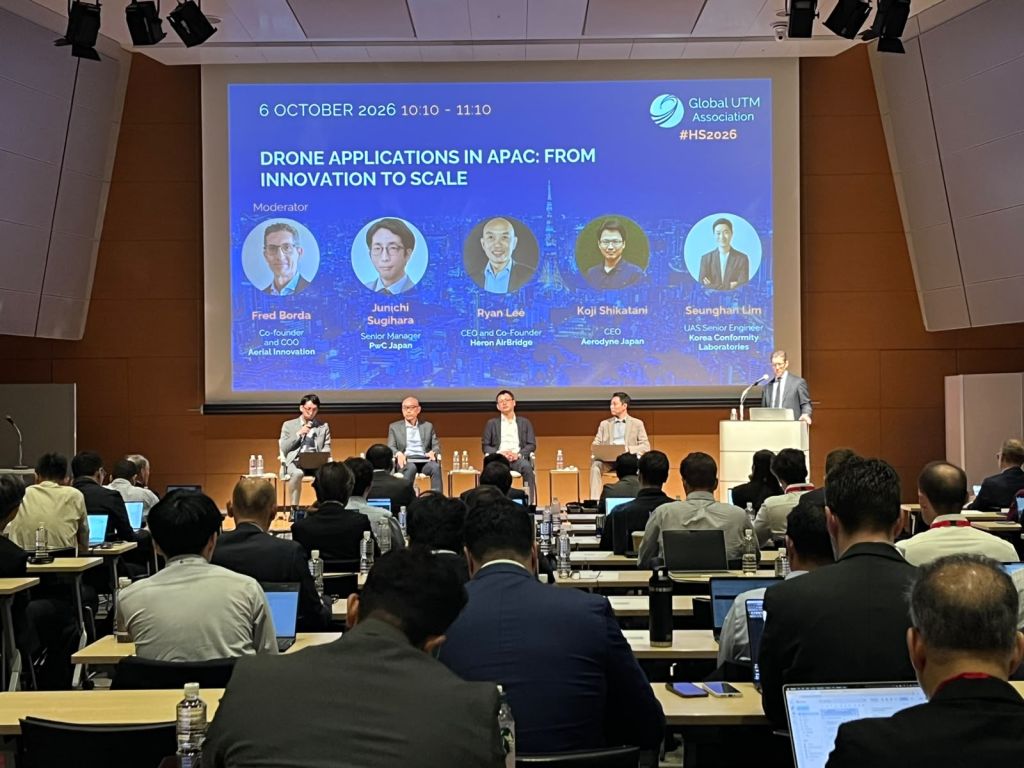
Panelists emphasized that the strongest business cases are found where drones solve a clear operational problem and offer an advantage over traditional methods. In some markets, ground-based alternatives remain cheaper for routine short-distance tasks, while drones can provide clearer value for remote surveying, inspection of high-risk infrastructure, or services to isolated locations.
The economics also reinforced the case for automation. A one-pilot-per-aircraft model means personnel requirements rise alongside fleet size. Therefore, speakers highlighted one-to-many operations, automated testing, and scalable approval processes as important steps toward improving the economics of high-volume operations.
Building the low-altitude economy
Those themes converged in Building the Low-Altitude Economy, where representatives from U.S. companies and the FAA discussed what is already enabling UTM-supported operations to scale in the United States.
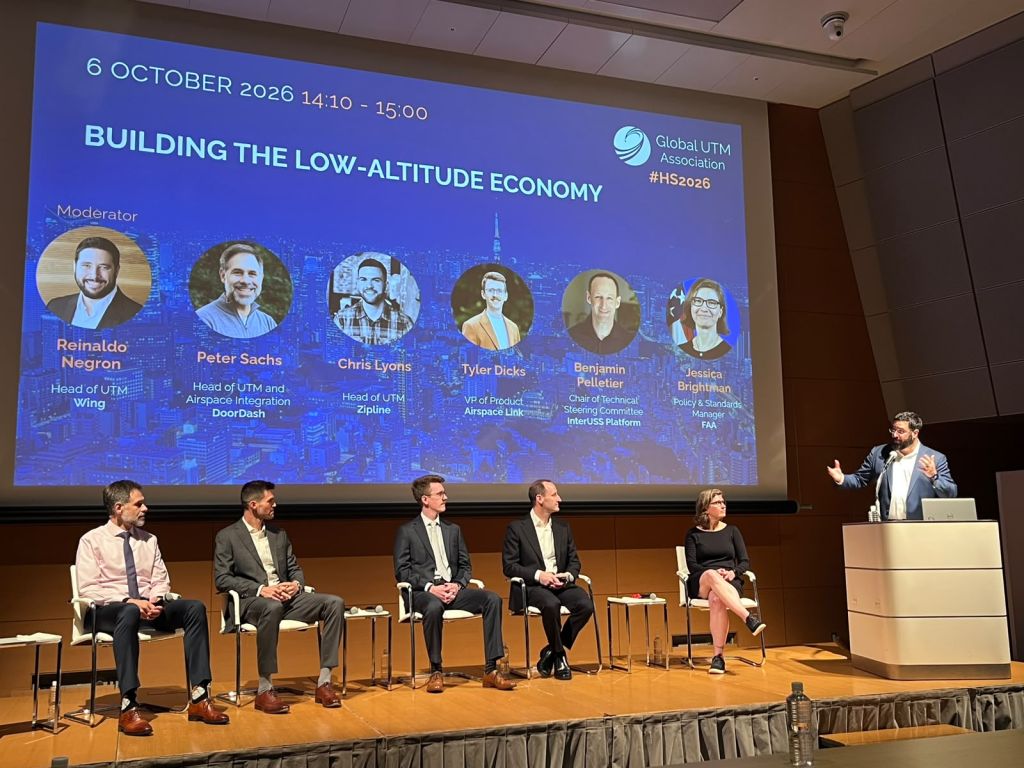
The American experience highlighted the importance of public-private collaboration. Speakers described how government and industry progressed from testing and pilot programs toward operational UTM, with industry participants working together on technical implementation, governance, and mechanisms for onboarding additional service providers.
The discussion also illustrated what scale means operationally. UTM is supporting not only package delivery, but also public safety, infrastructure inspection, and other BVLOS use cases. As different missions increasingly share low-altitude airspace, strategic deconfliction and prioritization mechanisms are becoming more important.
Automation is also reshaping the way operations are managed. One of the key takeaways from the discussion was that scaling UTM requires continuous learning. Standards create a strong foundation, but real-world operations often uncover challenges that are difficult to predict. Addressing them requires clear governance, robust testing, and close collaboration across the ecosystem.
From discussion to demonstration
Harmonized Skies 2026 did not end with conference-room discussions. The program also included an operational demonstration showcasing global UTM in action, followed by an introduction to the live flight demonstrations and a dedicated Live Flight Demonstrations session held at Uminomori in Tokyo Bay.
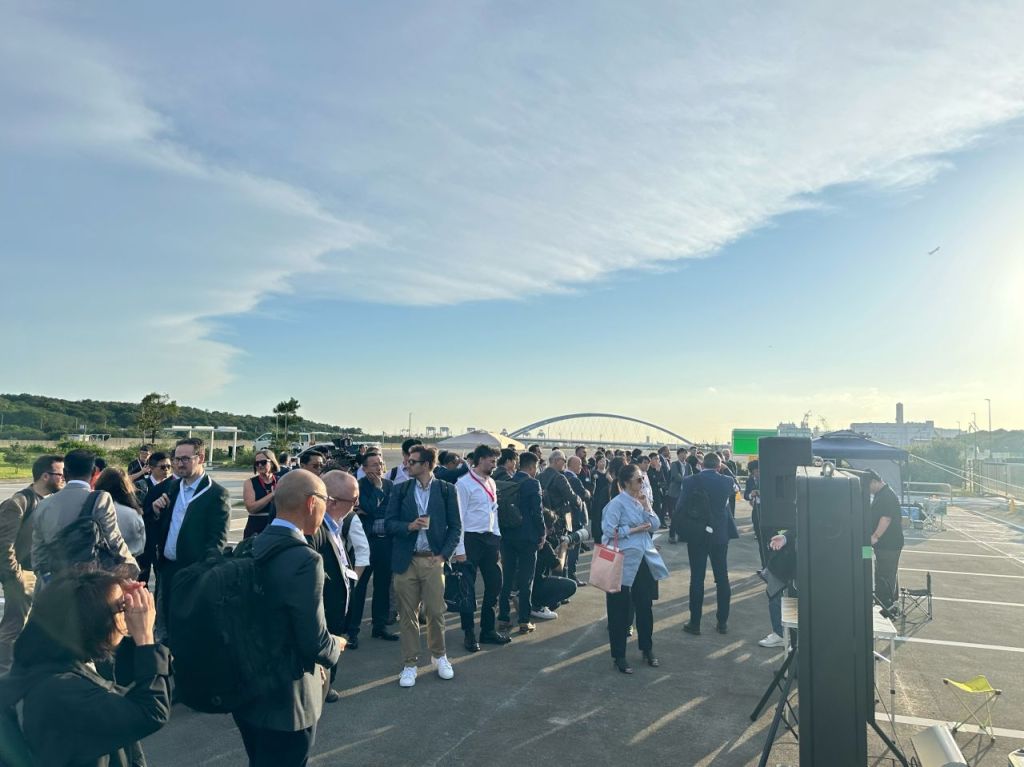
This practical component complemented the discussions by bringing operational demonstrations on pre-flight deconfliction.
The event concluded with a networking cocktail co-hosted by GUTMA and ASTM, giving participants an opportunity to continue the conversations and connections developed throughout the conference.
Harmonization as an enabler of scale
Across the conference, the same challenge appeared from different perspectives.
Regulators are looking for ways to maintain safety while rapidly accommodating evolving digital systems. Standards organizations are working to turn common requirements into testable specifications. Operators need predictable pathways that allow them to deploy across markets. UTM providers need interoperability and scalable digital assurance. Telecommunications providers are becoming increasingly relevant to the infrastructure supporting automated aviation. And across APAC, Europe, and the United States, companies are confronting the economics of moving from demonstrations to repeatable operations.
The discussions at Harmonized Skies 2026 showed that the sector needs to focus on the elements that can be shared: standards, interfaces, testing methodologies, evidence, and interoperable digital services.
